

Chapter 22 - ROOT CAUSE ANALYSIS
BLCOP- SESSIONS SUMMARY
GIANI- Material (STORY & CHALLENGES)
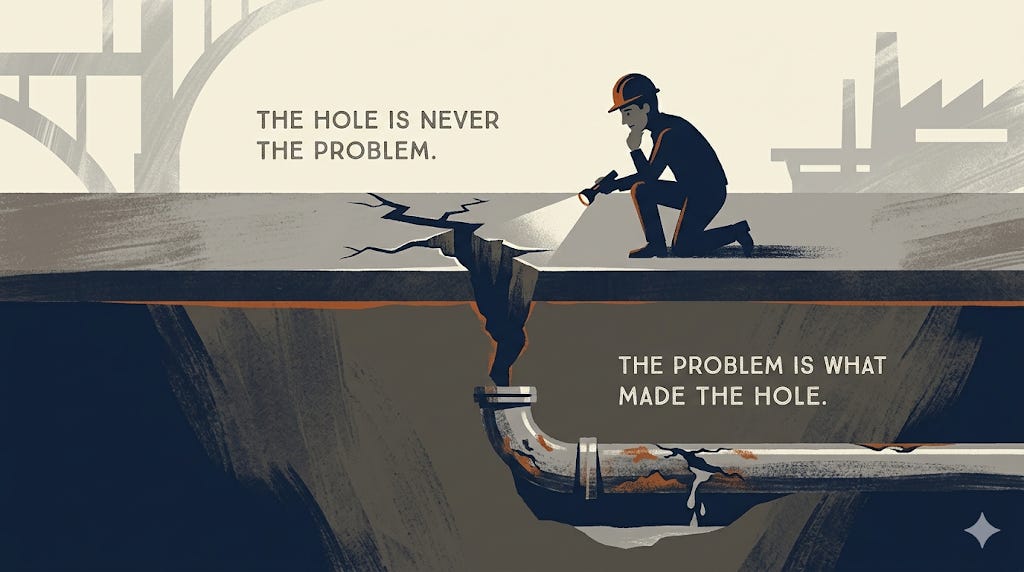
THE HOLE IS NEVER THE PROBLEM
Most people spend their lives fixing the wrong things.
Not because they are careless. Not because they are unintelligent.
Because they stop one question too early.
Something breaks. Something goes wrong. Something keeps failing despite every effort to fix it.
And the instinct — immediate, universal, deeply human — is to treat what you can see.
The wet floor gets mopped. The argument gets apologized for. The symptom gets medicated. The employee gets replaced.
And for a while, it feels like progress.
Until it happens again.
And again.
In a slightly different form, wearing a slightly different face —
but carrying the exact same cause underneath.
This is the gap between solving problems and understanding them.
Most people live their entire lives on the surface of things — reacting to what appears, managing what is visible, treating the effect while the cause quietly continues.
A few people learn to go deeper.
They are not smarter. They are not more experienced.
They simply refuse to accept the first explanation.
They ask one more question.
And then one more after that.
There is a reason bridges built centuries ago still stand while modern structures collapse within decades.
The engineers who built to last did not just solve the problem in front of them.
They asked what would eventually create the next problem.
And the one after that.
They did not stop at the crack in the wall.
They asked what was shifting in the foundation.
This is also what the best doctors do.
What the best leaders do. What the best parents, teachers, and investigators do.
They treat the visible problem — of course they do.
But they never mistake treating it for understanding it.
Because a problem that is only treated will return.
A problem that is understood can finally end.
The deepest causes are almost never dramatic.
They are not hidden in complexity. They are not buried under layers of technical mystery.
They are ordinary.
A gutter nobody repaired. A water bottle nobody packed. A child who was frightened but didn’t have the words. A pot with no hole at the bottom.
The cause was always there.
Plain. Patient. Waiting.
Right beneath the thing everyone was already staring at.
Root cause analysis is not a process.
It is a posture.
The posture of someone who has learned to be genuinely curious about why — not just once, not just on the surface, but all the way down.
To the place where the real answer lives.
Because the hole is never the problem.
The problem is what made the hole.
And once you find that —
everything changes.
Story by GIANI| Challenges by GIANI
A. THE PASSAGE
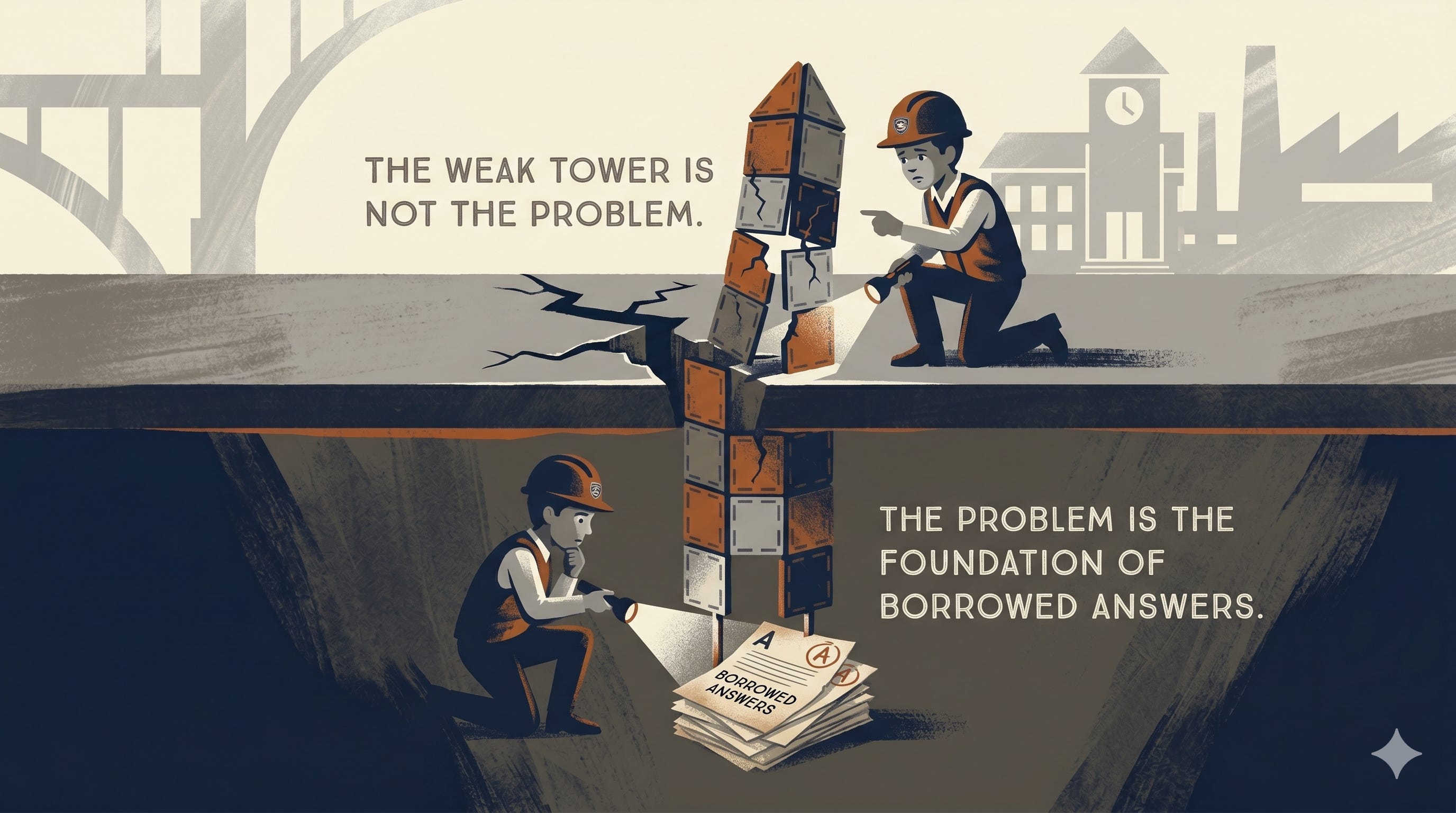
Introduction: Daily Discovery – From Helping Others to Finding Your Own Path
In 2026, our Leadership Development journey launches an energetic new chapter: the Daily Discovery phase. This stage invites ambassadors to stop waiting for perfect plans and start paying attention to what sparks their curiosity each morning. It's about asking small but powerful questions like "What if I tried this?" or "What did I learn today?" instead of searching for one big answer. Daily Discovery turns every ordinary moment into a chance to grow.
Think of leadership development like building with magnetic tiles. You don't start with a castle in mind. You snap a few pieces together, watch them connect or fall apart, then try a different angle. In the Daily Discovery phase, students experiment with tiny actions—saying hello to someone new, jotting down one idea, or noticing what went well after a quiz. Each small move clicks into place, forming a shape you never expected. Just as a tower gets stronger with every tile, leadership gets sharper with every daily try.
At this stage, students stop memorizing theories and start living them. They set mini-challenges for themselves: finish a chapter, help a classmate, or improve one homework habit. Some attempts work beautifully; others flop like a pancake. That's the point. Every flop teaches something a success cannot. Through short reflections and peer encouragement, ambassadors learn that discovery isn't about getting it right on the first try—it's about showing up, noticing what happens, and adjusting tomorrow.
Mistakes become data, not disasters. A low score on a math quiz? That's a clue about what to practice next. An awkward group project? That's a lesson in listening or speaking up. Like leveling up in a video game, students realize that real progress comes from many small attempts, not one lucky shot.
Leadership development is a wide journey, like a large pizza that must be enjoyed slice by slice. Each season focuses on one mindset so growth can happen meaningfully and sustainably.
As ambassadors step into Daily Discovery, they stop seeing themselves as passengers on a fixed track. Instead, they become explorers with a compass and a notebook—ready to test, wonder, and learn from whatever the day brings. They take ownership of their own growth, adjust when something feels off, and slowly transform into confident, purpose-driven global citizens.
Here we start to become the GLOBAL CITIZEN.
The Passages: When the Shortcut Was Chosen
The classroom looked ordinary from the door.
Rows of desks. A clock ticking. The soft sound of pencils moving.
But inside that room, invisible habits existed.
Everyone believed they understood what success looked like.
This student always finishes first.
That student never makes mistakes.
This student raises their hand the most.
That student probably does not need to study.
These thoughts appeared naturally, almost automatically.
No one said them out loud.
No one thought they were dangerous.
That was the dangerous part.
When the teacher handed out the monthly quiz, silence fell across the room. Students opened their papers and began reading quietly.
Some students started writing immediately.
Others sat still, thinking first.
One student hesitated longer than the rest.
They were not unintelligent.
They had simply forgotten to prepare the night before.
People often mistook a bad day for a permanent weakness.
The first few questions felt difficult.
The student's mind went blank.
Panic started to creep in.
The student looked to the left.
A classmate was writing quickly.
The answers looked clear and confident.
The student looked to the right.
Another classmate had already finished half the page.
A quiet voice inside whispered,
"Just take a glance. No one will know."
The student's eyes moved sideways.
The borrowed answer was copied quickly.
Then another.
Then another.
The quiz ended.
Papers were collected.
The student walked out with relief.
But something felt wrong.
That night, the student could not sleep.
The borrowed answers kept appearing in their mind.
Not because they were caught.
Because they knew the truth.
The next morning, the teacher returned the graded quizzes.
The student received a high score.
Everyone congratulated them.
The student smiled but felt nothing inside.
During the next lesson, the teacher asked a question about the quiz material.
The student looked down at the desk.
No answer came.
The teacher waited.
The class waited.
The borrowed answers could not help now.
That silence was heavier than any zero.
After class, the student stayed behind.
Everyone else left.
The room became very quiet.
The student walked toward the teacher's desk.
Hands shaking slightly.
Voice almost gone.
"I need to tell you something."
The teacher listened.
No anger. No disappointment.
Just a quiet nod.
The student explained everything.
The forgotten preparation.
The panic.
The glances.
The borrowed answers.
When the story ended, the teacher spoke softly.
"Thank you for telling me. That took more courage than the quiz ever could."
The quiz score was changed to a zero.
The student had to retake the test alone.
But something unexpected happened.
When the new paper arrived,
the student did not look left or right.
There was no one to copy from anyway.
Slowly, painfully, honestly,
the student answered each question alone.
Some answers were wrong.
That was fine.
Some answers were correct.
That felt real.
When the retake was finished, the student walked out with no relief this time.
No borrowed answers.
No hidden guilt.
Just the quiet weight of having tried.
The final score was lower than before.
But the student slept perfectly that night.
The classroom did not change overnight.
But something shifted inside one person.
Cheating had never been about the grade.
It had been about avoiding the feeling of not knowing.
And the only cure for that feeling was not a borrowed answer.
It was the courage to say,
"I do not know this yet. But I will find out."
Daily Discovery teaches that honesty is not a rule to follow.
It is a tool to see yourself clearly.
Without honesty, you never truly know what you can do.
You only borrow what others have done.
And borrowed answers can never build a real future.
Sometimes success is not about having the highest score.
Sometimes it is about looking at your own paper
and knowing every word came from you.
For the Beginners
Why Did That Happen? — The Art of Finding the Real Answer
Things go wrong all the time. But the reason things go wrong is almost never the thing you see first.
Read each mystery below and guess: what do you think really caused it to happen?
1. The Bakery That Kept Running Out of Bread — Every Single Tuesday
A small bakery in a busy town sold out of bread every Tuesday by 10am. The baker woke up earlier. He baked more loaves. He hired extra help.
It kept happening.
Finally, someone asked a different question — not “how do we bake more” but “why is Tuesday different?”
It turned out a large office nearby held its weekly team breakfast every Tuesday morning. Forty people. Every week. Nobody had thought to ask.
What was the real problem — and what was the fake one?
2. The School Hallway That Was Always Wet
Every rainy day, the floor near the main entrance was soaked and slippery. The janitor mopped it every morning. Students still slipped. A sign was put up. Students still slipped.
The school kept treating the wet floor.
Nobody asked why the floor was wet in that exact spot and nowhere else.
It turned out one section of the roof guttering was broken and had been pouring water directly above the entrance for two years.
What should they have fixed first?
3. The Plant That Kept Dying
A girl named Priya received a plant for her birthday. She watered it carefully. She moved it to the sunniest windowsill. She bought special soil. She read every gardening book she could find.
The plant kept dying.
Her grandmother visited and looked at it for ten seconds.
“The pot has no hole at the bottom,” she said. “The water has nowhere to go. The roots are drowning.”
Priya had been solving the wrong problem for three months.
What is the lesson?
4. The Football Team That Kept Losing in the Second Half
A youth football team won almost every first half. Then they fell apart. The coach changed their formation. He changed their training schedule. He gave them longer pep talks.
Nothing worked.
A parent in the stands noticed the team never brought enough water bottles. By halftime, the players were too tired and thirsty to think clearly.
The problem was never the tactics.
What was it really?
5. The Classroom Where Nobody Asked Questions
A teacher was frustrated. Her students were smart but silent. She asked questions. Nobody answered. She tried new lessons. She tried group work. She tried making the class more fun.
Still silence.
Then a student slipped her a note:
“We are scared of getting it wrong in front of each other.”
The problem was never the lessons.
What was it really, and what should the teacher have done first?
Your Turn — Solve Your Own Mystery
Step 1 — Create a Problem
In your group, invent a funny or surprising problem that keeps happening to a character — a kid, a chef, a pet, a school, anyone you like.
Make it something where the obvious solution does not work.
Step 2 — Build Your Story
Decide together:
What is the problem that everyone can see?
What are all the wrong solutions people try?
What is the real hidden cause nobody noticed at first?
Your hidden cause should be clever, surprising, or make everyone laugh when they hear it.
Step 3 — Present to the Room
Come back and tell your story — but stop just before you reveal the real cause. Let the other groups guess what was actually going on.
Whichever group guesses correctly wins the round.
Step 4 — Vote
Everyone votes for one winner: The Most Clever, Surprising & Satisfying Hidden Cause.
Remember — the best problems are the ones where the answer was hiding in plain sight all along.
JOIN US THIS WEEK @ THE EXPO and let’s discuss your academic notes on this exciting review ZOOM ID : 769 712 5558 (click ZOOM for the link or use the ZOOM ID)
PASS CODE : MEET
8:30 PM - 9:30 PM SINGAPORE TIME
7:30 PM - 8:30 PM VIETNAMESE TIME
6:00 PM - 7:00 PM INDIAN STANDARD TIME
4:30 PM - 5:30 PM OMAN TIME
The agenda this week
score board - Self reflection for AMBASSADORS : the quality of the program is determined by the filling up of the document and self reflection and responses to feedback already provided.
challenges for the week
practical use of school knowledge.
A New chapter 22- awaits REMINDER ON THE DATES
Week of Chapter 23 - EMOTION INTELLIGENCE
JAYDEN - SESSIONS SUMMARY
ALL MEMBERS - READ EVALUATION AND COMMENT
MATERIAL - ZAVA
B. ROOT CAUSES ANALYSIS

Reflection – Taking time to think deeply about your thoughts, emotions, and experiences so you can understand yourself and your situation better.
Inquiry: Asking probing questions to identify causes.
Logical Thinking: Mapping effects to their origins.
Open-Mindedness: Considering multiple possible causes.
Differentiate Symptom and Root Cause: Identifying what’s superficial versus fundamental.
Validation: Testing assumptions against evidence.
Observation: Detecting emotional cues in others.
Curiosity: Digging deep to uncover underlying issues.
Systematic Approach: Following a structured method for analysis.
Documentation: Recording findings for clarity and accountability.
For the Beginners
Why Did That Happen? — The Art of Finding the Real Answer
Things go wrong all the time. But the reason things go wrong is almost never the thing you see first.
Read each mystery below and guess: what do you think really caused it to happen?
1. The Bakery That Kept Running Out of Bread — Every Single Tuesday
A small bakery in a busy town sold out of bread every Tuesday by 10am. The baker woke up earlier. He baked more loaves. He hired extra help.
It kept happening.
Finally, someone asked a different question — not “how do we bake more” but “why is Tuesday different?”
It turned out a large office nearby held its weekly team breakfast every Tuesday morning. Forty people. Every week. Nobody had thought to ask.
What was the real problem — and what was the fake one?
2. The School Hallway That Was Always Wet
Every rainy day, the floor near the main entrance was soaked and slippery. The janitor mopped it every morning. Students still slipped. A sign was put up. Students still slipped.
The school kept treating the wet floor.
Nobody asked why the floor was wet in that exact spot and nowhere else.
It turned out one section of the roof guttering was broken and had been pouring water directly above the entrance for two years.
What should they have fixed first?
3. The Plant That Kept Dying
A girl named Priya received a plant for her birthday. She watered it carefully. She moved it to the sunniest windowsill. She bought special soil. She read every gardening book she could find.
The plant kept dying.
Her grandmother visited and looked at it for ten seconds.
“The pot has no hole at the bottom,” she said. “The water has nowhere to go. The roots are drowning.”
Priya had been solving the wrong problem for three months.
What is the lesson?
4. The Football Team That Kept Losing in the Second Half
A youth football team won almost every first half. Then they fell apart. The coach changed their formation. He changed their training schedule. He gave them longer pep talks.
Nothing worked.
A parent in the stands noticed the team never brought enough water bottles. By halftime, the players were too tired and thirsty to think clearly.
The problem was never the tactics.
What was it really?
5. The Classroom Where Nobody Asked Questions
A teacher was frustrated. Her students were smart but silent. She asked questions. Nobody answered. She tried new lessons. She tried group work. She tried making the class more fun.
Still silence.
Then a student slipped her a note:
“We are scared of getting it wrong in front of each other.”
The problem was never the lessons.
What was it really, and what should the teacher have done first?
Your Turn — Solve Your Own Mystery
Step 1 — Create a Problem
In your group, invent a funny or surprising problem that keeps happening to a character — a kid, a chef, a pet, a school, anyone you like.
Make it something where the obvious solution does not work.
Step 2 — Build Your Story
Decide together:
What is the problem that everyone can see?
What are all the wrong solutions people try?
What is the real hidden cause nobody noticed at first?
Your hidden cause should be clever, surprising, or make everyone laugh when they hear it.
Step 3 — Present to the Room
Come back and tell your story — but stop just before you reveal the real cause. Let the other groups guess what was actually going on.
Whichever group guesses correctly wins the round.
Step 4 — Vote
Everyone votes for one winner: The Most Clever, Surprising & Satisfying Hidden Cause.
Remember — the best problems are the ones where the answer was hiding in plain sight all along.
C. Participant Evaluation Summary
TBC…
D. Summary
I’m afraid you’re a bit too early… check back later this week
Our Audience reads from the following locations : Please help to spread the word….
